DATA LICENCINGIntelligence structured around what truly drives luxury growth.
Two decades of luxury expertise, organised through a single strategic framework. ADBOR connects Audience, Demand, Brand, Offering, and Revenue — turning data across 185+ brands and 64 markets into intelligence that drives decisions.

The Data Behind LuxuryIQ
LuxuryIQ draws on seven distinct data sources, updated continuously, covering the signals that matter most to brand leaders: what consumers are searching for, how your competitors are positioned, what's happening in the secondary market, and what the industry's own export figures say about demand.
Currently Available:
- Search Demand
- Social Media Performance
- Paid Advertising
- Product Catalogues
- Secondary & Grey Market Data
- Swiss Watch Export Statistics

Monthly Google search volume across 60+ markets. We track the specific terms consumers type when looking for a brand or a model – broken down by collection, country, and trend over time.
Benefits:
- Know exactly where consumer demand is rising – by market, by collection, by competitor – before committing budgets or making a move.
- Detect emerging demand for a category or aesthetic before it peaks, turning search data into a forward-looking strategic input.
- Measure the real-time impact of press coverage, campaign launches, and product announcements on consumer interest.
- Assess cannibalisation risk and validate portfolio decisions with evidence of how collections compete for search attention.
- Ground pricing and market entry decisions in observed consumer demand across 60+ markets, not assumptions.
Example Prompt: "What is [brand]'s share of Haute Horlogerie search in the US and Japan vs Vacheron and JLC, YoY?"
Currently Available Industries:

Organic post-level data across platforms including Instagram, TikTok, Weibo, RedNote, Douyin, and WeChat. Every post captured carries engagement metrics appropriate to the platform – likes, comments, shares, saves, views – alongside follower counts and content format.
Benefits:
- Benchmark organic social performance against competitors at post level, not just aggregate follower counts.
- Identify which content formats and topics drive the strongest engagement, by platform and market.
- Monitor follower growth by brand and platform over time, to track share of audience and spot momentum shifts early.
- Detect shifts in a competitor's posting frequency, format, or content tone before they register in broader performance metrics.
- Assess how audience engagement varies by market, to inform where and how to prioritise social investment.
Currently Available Industries:

Ad creative metadata from Meta ad libraries, tracking which brands run ads, in which markets, for how long, and in what formats, to map competitor activity and identify shifts in paid media strategy before they become obvious.
Benefits:
- Track competitor ad activity by market, duration, and format – without relying on third-party estimates.
- Detect shifts in a competitor's paid media strategy before it becomes visible in their results.
- Identify when a competitor enters or exits a market through paid media, as an early signal of strategic repositioning.
- Benchmark brand ad presence against competitors by market to identify gaps or over-exposure.
- Understand which creative formats competitors are prioritising, to inform content format decisions.
Example Prompt: "Map [competitor set]'s Meta ad activity month by month over 6 months. When is the competitive quiet window?"
Currently Available Industries:

MSRP data across key luxury markets, including the United States, United Kingdom, France, Switzerland, and China. Updated bi-weekly, it covers each brand's active catalogue with full product specifications – case material, dial colour, complications, collection hierarchy, and production status. Prices are tracked in local currencies, enabling direct cross-market price comparisons for the same reference.
Benefits:
- Compare official retail prices for the same reference across five key markets in local currency.
- Track competitor pricing changes bi-weekly to detect cross-market strategy shifts early.
- Map a competitor's full active catalogue by collection, specification, and production status to identify portfolio moves.
- Assess price positioning against competitors at reference level, not brand averages.
- Monitor production status across the catalogue to detect discontinuations and new introductions in near real-time.
Example Prompt: "Compare [brand]'s MSRP range (entry, median, ceiling) vs [competitor]. Which tier has the most competition?"
Currently Available Industries:

Weekly snapshots of active listings across 50+ resale and auction platforms globally, including Chrono24, Watchfinder, and major auction houses. We track each listing’s asking price, deviation from official retail, time the piece has been on the market, and whether original box and papers are included.
Benefits:
- Track secondary market premiums and discounts versus retail across 50+ resale platforms, updated weekly.
- Identify which references command the strongest premiums to inform pricing and allocation decisions.
- Monitor listing volume by reference to detect supply shifts before they register in retail demand.
- Measure time-on-market by reference as a direct indicator of liquidity and collector interest.
- Benchmark secondary market positioning against competitors across global resale and auction platforms.
Example prompt: "Show [brand]'s median price deviation vs MSRP vs [competitors]. Which collection holds value best?"
Currently Available Industries:

Official monthly export shipment data published by the Fédération de l'Horlogerie (FH), covering 41 markets. Figures are released monthly and represent the primary official measure of Swiss watch export volume and value by destination.
Benefits:
- Track official Swiss watch export volumes and values by destination market, updated monthly.
- Identify which markets are growing, contracting, or shifting in share using the industry's primary official data source.
- Benchmark your brand's performance against macro export trends to contextualise growth or decline.
- Detect early signs of demand softening or acceleration in specific markets before they appear in internal sales data.
- Monitor how export distribution across 41 markets shifts over time to inform geographic strategy decisions.
Example Prompt: "How do Swiss watch exports to China and the US compare to [brand]'s own trend over the last 12 months?"
Currently Available Industries:
products offering3 Ways to Access Our Proprietary Data Layer
 Explore LuxuryIQ SaaS
LuxuryIQ SaaS
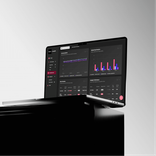
The executive intelligence platform. Proactive market monitoring, Luna AI advisor, and decision-ready alerts — all through a single interface.
 Explore LuxuryIQ Connect
LuxuryIQ Connect
Embed our proprietary intelligence directly into Claude, ChatGPT, Gemini Enterprise, or Copilot. One integration. Instant luxury expertise.
 Discuss Licensing
Data Licensing
License individual datasets or the complete suite with full API access — structured around ADBOR and continuously updated for your own platforms and applications.


The intelligence is here. The only question is how you use it.
Fully Compliant With Global Data Regulations
Data layer avoids personal data and sensitive categories by design, and is hence compliant with GDPR, PIPL, CCPA, etc.
Chain-of-Custody Transparency
Traceable Sources & Provenance, with ability to demonstrate exactly where data comes from and how it was obtained.
Clean, Normalised, Quality-Assured Data
No Noise, No Toxicity, No Liability. The value is not just access, but the curation and safety of the dataset.
Secure Delivery & Access Controls
Even without SaaS or MCP, you still guarantee secure file transfer and controlled access.